

(CORPUS CHRISTI, Texas) — As soon as Wednesday afternoon, a Texas jury will begin deliberating whether a law enforcement officer should be held criminally responsible for failing to act in the face of one of the worst mass shootings in U.S. history.
After nine days of testimony, prosecutors and defense lawyers in the trial of former Uvalde schools police officer Adrian Gonzales are scheduled to deliver their closing arguments in a Corpus Christi courtroom on Wednesday morning. Deliberations could begin as early as Wednesday afternoon.
At issue is whether Gonzales — one of the first officers to arrive at Robb Elementary on May 24, 2022 — ignored his training and endangered dozens of students when he responded to the shooting.
Prosecutors allege he “intentionally, knowingly, recklessly and with criminal negligence” put children in danger by failing to “engage, distract, and delay the shooter” in the critical first minutes of the shooting. If convicted on all 29 counts, Gonzales could spend the rest of his life in prison.
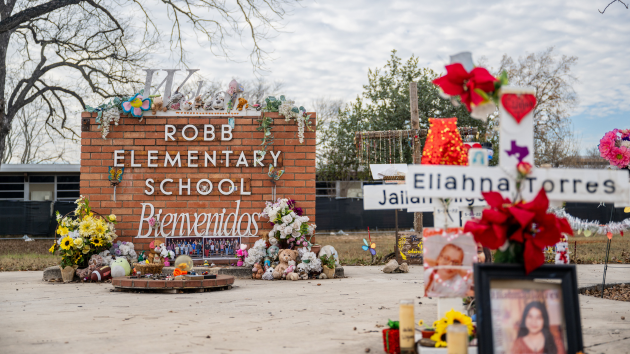
Nineteen students and two teachers died in the shooting nearly four years ago, with police officers waiting 77 minutes to confront the gunman as he was holed up inside a double classroom with students and teachers. While the shooting response has been the subject of hearings and investigations, the case against Gonzales marks the first criminal trial related to the shooting and the delayed police response.
What is he charged with?
Gonzales was charged with 29 felony counts of abandoning/endangering children – one count for each of the 19 students who died in the shooting and the 10 children who survived in classroom 112.
Each count carries a maximum penalty of two years in prison, and Gonzales could spend the rest of his life in prison if he is convicted. While juries in Texas sometimes determine criminal sentences, Gonzales has opted to be sentenced by Judge Sid Harle if he is convicted.
What happened to the police chief’s case?
Along with Gonzales, prosecutors also charged former Uvalde schools Police Chief Pete Arredondo, who was the scene commander during the Robb shooting. His case has been indefinitely delayed due to a pending civil lawsuit involving the tactical unit that ultimately breached the classroom and killed the shooter.
Why is the trial in Corpus Christi?
Judge Sid Harle began overseeing the case after a local judge in Uvalde recused themselves from the matter.
Taking place 200 miles from Uvalde, the trial is being held in a Corpus Christi courtroom after Gonzales’ attorneys successfully argued he would be unable to have a fair trial in the county where the shooting took place.
Who is in the jury?
While emotions flared during jury selection — with some now-disqualified jurors vocally criticizing the police response to cheers from other jurors — Harle was able to seat a jury in less than a day.
The jury and alternates included 11 women and five men, though one of the male jurors was excused last week due to a family emergency.
Are there any comparable cases?
According to Phil Stinson — a professor at Bowling Green State University in Ohio who maintains a database of police officers who have been arrested — the case against Gonzales is uncommon but not unprecedented.
Prosecutors in Florida attempted to similarly charge a law enforcement officer for his response to the 2018 shooting at Marjory Stoneman Douglas High School in Parkland, Florida. Seventeen were killed when a gunman opened fire that day, Feb. 14, 2018, in Parkland.
A jury in 2023 acquitted Scot Peterson, a former Broward County sheriff’s deputy, after he was charged with child neglect and culpable negligence for his alleged inaction following the shooting.
How did prosecutors approach the case?
Prosecutors called three dozen witnesses — including investigators, teachers, and the families of victims — over nine days of testimony to argue that Gonzales missed a critical opportunity to stop the shooter before he entered Robb Elementary. They allege he was one of the first to respond to the shooter, was explicitly told the location of the gunman before he entered the school but failed to act.
“I told him that he needed to get stopped before he went into the fourth-grade building. We needed to stop him,” teaching aide Melodye Flores testified.
“And what did he say?” prosecutor Bill Turner asked.
“He, just, nothing,” Flores said.
According to a Texas Ranger who testified for prosecutors, Gonzales had more than a minute to stop the shooter before he entered the school, and the gunman was able to fire more than a hundred rounds during a two-minute period while Gonzales was standing outside Robb Elementary.
How did defense lawyers approach the case?
Defense lawyers spent less than three hours on Tuesday calling two witnesses before resting their case. Gonzales declined to testify in his own defense.
His lawyers have argued that Gonzales not only followed his training that day but also highlighted that other officers had similar — if not better — opportunities to stop the shooter.
They accused prosecutors of “Monday-morning quarterbacking” Gonzales’ actions that day and argued he acted appropriately based on the limited information he had in the moment. They also highlighted that Gonzales attempted to enter the building with other officers but was directed by his commanding officer to retreat to call in for SWAT support.
Copyright © 2026, ABC Audio. All rights reserved.


